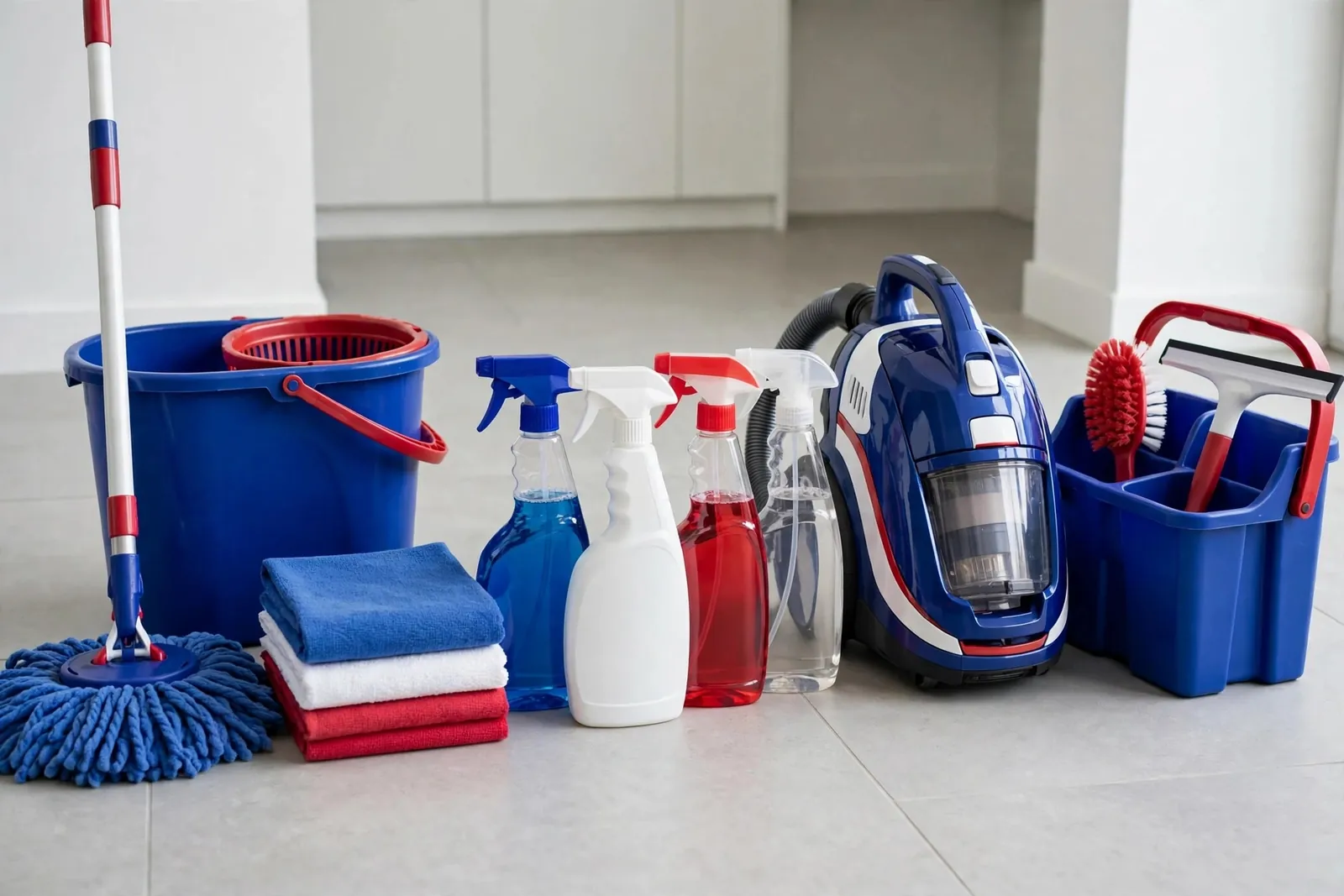

Short answer: a clean workplace shapes how customers see your business, helps reduce the spread of illness between staff, and makes the space easier and more pleasant to work in. The cost of regular cleaning is usually small compared with the cost of lost business or sick days.
First impressions
Customers form an opinion within seconds of walking in. Dusty reception desks, smudged glass doors and unpleasant toilets suggest a business that does not pay attention to detail, even if your service is excellent. For client-facing businesses, the reception and washrooms are part of the brand.
Health
Germs pass between people on shared surfaces: door handles, light switches, kitchen taps, the fridge door, shared keyboards and phones. Cleaning and sanitising these regularly, alongside handwashing, helps reduce how often illness spreads through a team.
Staff and productivity
People work better in clean, orderly spaces. Clutter and dirt are distracting, and a dirty kitchen or toilet quickly becomes a source of tension. Staff also tend to take more care of a space that is clearly looked after.
Protecting your premises
Regular cleaning protects your investment in floors, carpets, furniture and fittings. Grit wears down flooring, and grease and scale damage finishes over time.
What a sensible routine looks like
Daily
- Empty bins
- Clean and restock washrooms
- Clean kitchen surfaces and sinks
- Wipe high-touch points
- Sweep or vacuum busy areas
Weekly
- Dust desks and shelves
- Mop all hard floors
- Clean glass doors and partitions
- Clean inside the microwave and fridge
Periodically
In-house or outsourced?
Small offices sometimes rely on staff or a single cleaner. As a business grows, an office cleaning arrangement or janitorial contract gives you consistent standards, cover for absences and one point of contact. See our commercial cleaning page to start a conversation.